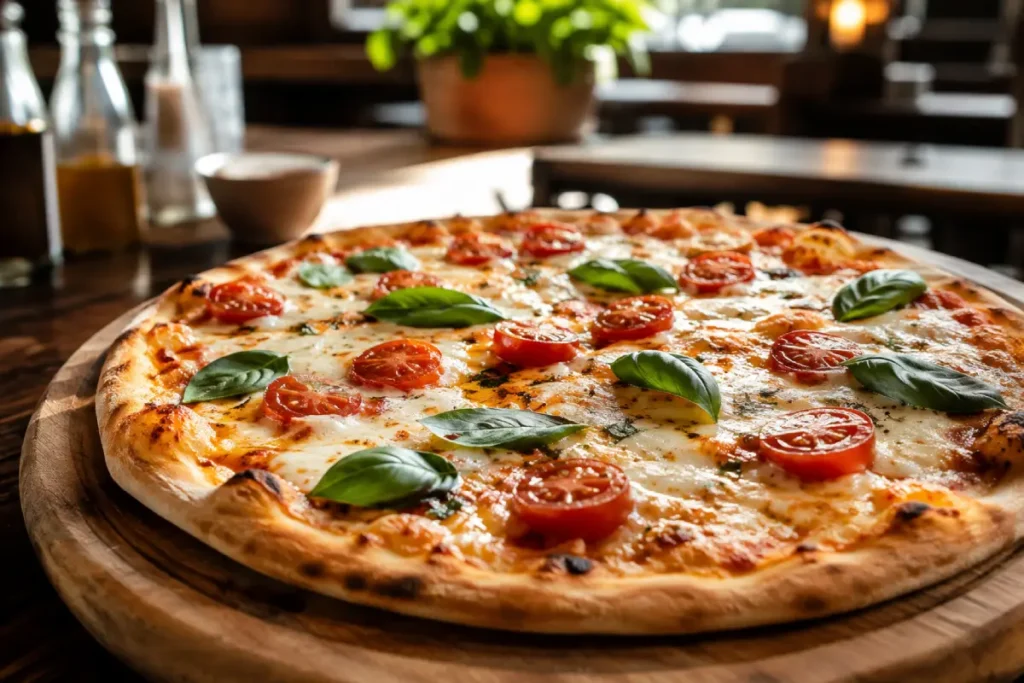

In a Columbia University study of restaurant meals tested by diners, 53% of pizzas labelled gluten free still showed traces of gluten. Pizza was the worst performer of all the dishes tested.
That research used a consumer sensor in the United States, and the authors flagged its limits. The reason behind the number still applies to every pizza shop in Perth: flour dust in the air, a shared oven floor, and one cutting wheel doing all the work. Coeliac disease affects around 1 in 70 Australians, and roughly 80% of them have not been diagnosed yet.
So here is the point of this guide. “Gluten free pizza Perth” is really two questions, and a menu answers neither: does this kitchen control contamination, and can anyone in it make decent gluten free dough?
In this guide
- Safe and tasty are two different questions
- Why the base tastes like cardboard
- What “gluten free” means by law in Australia
- Where gluten gets into your pizza
- Which base are you actually buying?
- Six questions to ask on the phone
- Where to look around Perth
- Getting it home without ruining it
- What to do next time you order
- FAQ: ordering gluten free pizza in Perth
Safe and tasty are two different questions
The first question is medical. Will this food make me ill? For someone with coeliac disease, that depends on kitchen systems, not recipes.
The second question is about food. Will this taste like pizza? That depends on the dough and how it gets baked.
Perth food guides answer the second one well and wave at the first. Sitchu praises Canteen Pizza in Applecross for a base with real chew and char, then notes it is not a dedicated gluten free venue. Both facts are true, and they pull in opposite directions.
Keep the questions apart. Praise for flavour tells you nothing about whether the peel got wiped.
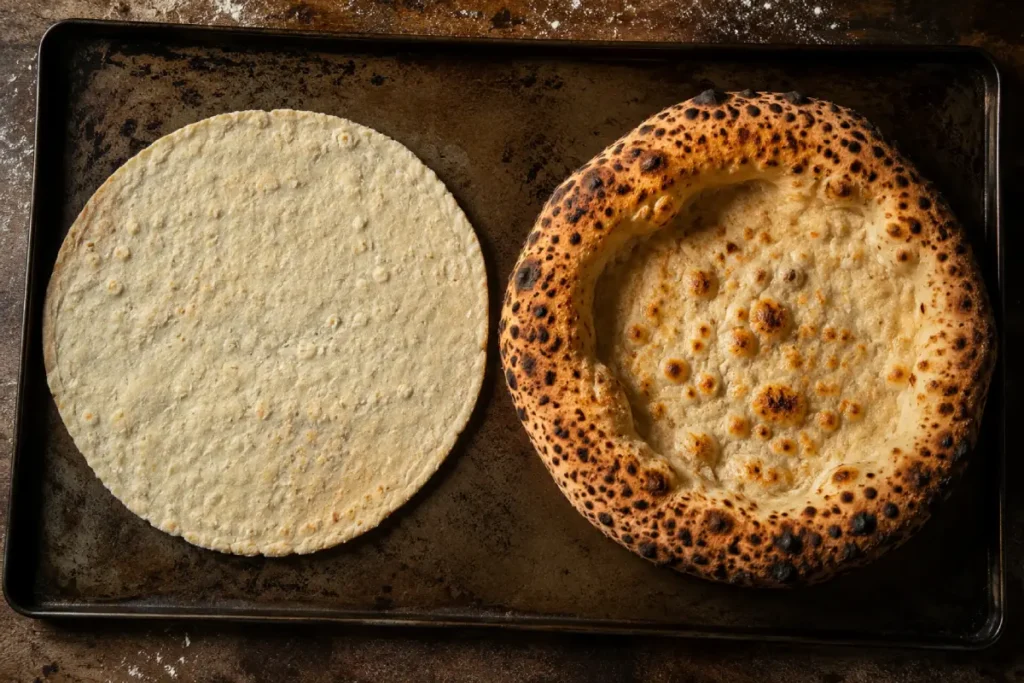
Why does the base taste like cardboard
Gluten is the protein web that traps gas in dough and gives it stretch. Take it out and you have rice flour, starch, and a binder trying to copy that web.
Most venues solve this by buying frozen part-baked bases. Those bases cook once at the factory, then again under your toppings, and the second bake finishes the drying job.
That double bake is the cardboard. Not the missing gluten, just water leaving a base that had little left to give.
What better kitchens do differently:
- More water in the dough, because starch holds it worse than wheat flour.
- A slow ferment, often overnight, for flavour that texture cannot provide.
- Baking on a tray or screen, which traps steam under the base.
- A slightly thicker base, which is why thin gluten free crusts disappoint.
Signs of house-made dough: the menu names it, staff can tell you the flour blend, and the thickness differs from the wheat pizzas.
What “gluten free” mean by law in Australia
Australia sets the strictest gluten rule in the world, and it covers restaurants too. Under the Food Standards Code, any business claiming gluten free must be confident the item has no detectable gluten, which laboratories report at around 3 parts per million.
Overseas menus work differently. The US, UK and EU allow up to 20 parts per million under the same words.
Now the part most Perth guides skip. Phrases like “gluten friendly”, “no added gluten” and “coeliac friendly” are not permitted claims under the Code, as Coeliac Australia explains.
That does not make a venue careless. Many use “gluten friendly” precisely because they know a shared oven cannot promise no detectable gluten. Read it as a warning, then ask what they are warning you about.
How little gluten it takes: the most cited trial, by Catassi and colleagues, found 50 mg of gluten a day damaged the gut lining of people with coeliac disease, and some reacted at 10 mg. Ten milligrams is a crumb, less flour than survives a quick wipe of a wooden peel.
Where gluten get into your pizza
Ask about these seven points by name, because “we’re careful” covers all of them and commits to none.
- Flour in the air. Staff toss wheat dough all night, and flour settles on anything left open on the bench.
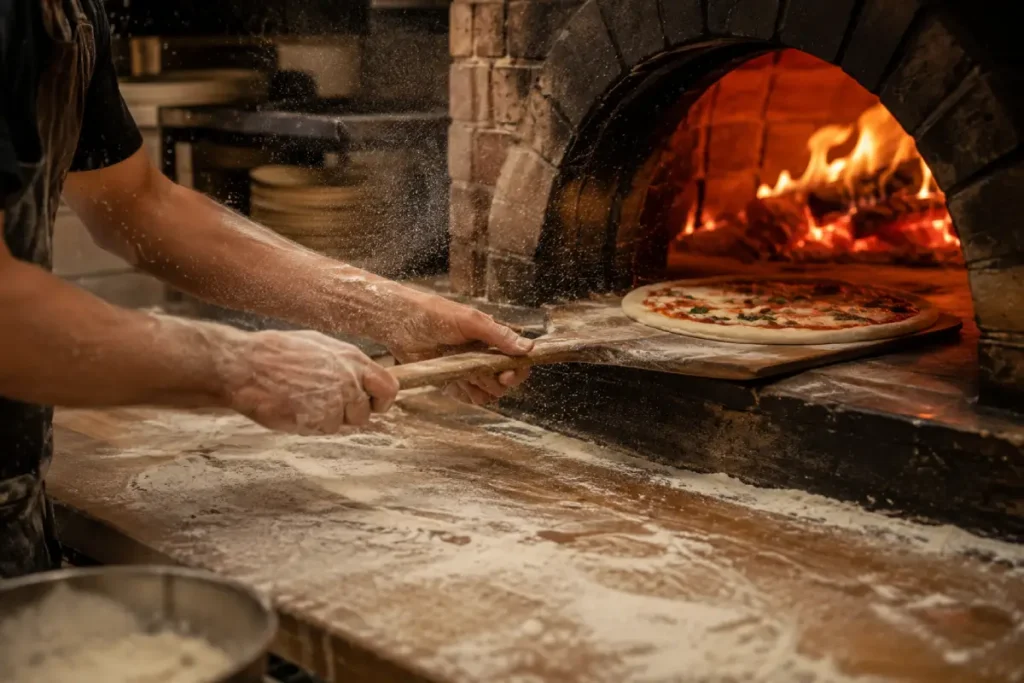
- The peel and oven floor. Wheat bases get dusted with flour so they slide off the peel, and that residue stays put.
- The cutting wheel. One wheel usually cuts every pizza, and cheese makes crumbs stick to the blade.
- Topping tubs. Same hands, same containers, flour transferring into the cheese.
- Shared fryers. Perth reviewers warn about this constantly. Your chips are often the bigger risk.
- Order sequence. A pizza built first on a clean bench differs from one built third during a Saturday rush.
- Boxes and delivery bags. Stacked hot boxes move crumbs. Ask for a separate box.
Which base are you actually buying?
| Base type | How to spot it | Taste to expect | Risk level | Ask this |
| Frozen part-baked, straight on the stone | Identical size every visit, staff cannot name the blend | Dry, brittle rim, soggy centre | Highest | “Does it go on the stone or on a tray?” |
| Frozen part-baked, tray-baked with separate prep | Same base, built away from the dough bench | Dry but holds together | Moderate | “Where and when do you build it?” |
| House-made gluten free dough, shared kitchen | Menu names it, thickness differs, staff describe the flour | Best realistic compromise | Moderate | “Separate peel, wheel and gloves?” |
| Dedicated gluten free kitchen | No wheat flour on site, or an audited separate section | Varies with skill, no safety trade-off | Lowest | “Is there wheat flour in the building?” |
Price tells you almost nothing here. A surcharge is normal in all four cases and reflects ingredient cost, not safety.
Six questions to ask on the phone
Call between 2pm and 4pm on a weekday, when someone has time to check. Many Australian kitchens already run structured back-of-house processes such as food waste audits, so asking one to document its gluten free handling isn’t an unusual request.
- “Is the gluten free base cooked in the same oven as the wheat pizzas?” Listen for whether they know. “Yes, but on its own tray” beats “should be fine.”
- “Do you use a separate peel and pizza wheel?” Specific enough that nobody bluffs it well.
- “Where do you put it together?” A good answer names a spot away from the dough bench, or a time, like “first, before we start tossing dough.”
- “Are your staff trained on coeliac orders, or accredited?” Coeliac Australia accreditation involves an audit of ingredients, recipes and procedures, plus lab test reports, renewed yearly.
- “What can’t you do safely?” Anyone who says “skip the chips, we share the fryer” is telling you the truth about the rest too.
- “Can it come uncut in its own box?” Uncut removes the wheel from the picture. Cut it at home with clean scissors.
Four specific answers out of six are a good sign. Six reassurances with no detail are not.
Where to look around Perth
Start with accreditation. Coeliac Australia publishes a list of accredited businesses you can filter to WA, and only those venues may show its gluten free symbol. A shared kitchen can qualify, since the program audits the process rather than banning wheat. Check it yourself, because licences run for 12 months.
Treat Perth food guides as taste research. Urban List, Perth is OK and Sitchu all name good bases, and Perth is OK tells coeliac readers to confirm with the venue first.
Use review directories for the awkward detail. FindMeGlutenFree’s Perth pages are where you find out which kitchens share a fryer and which wipe down between bases.
Check whether the gluten free option covers the whole menu. Suburban pizza shops often quietly do this better than city venues. Pizza Riviera in Perth, in Rivervale, offers a gluten free large across every traditional and gourmet pizza and delivers around Belmont, Ascot, Carlisle, Kewdale, Burswood and Lathlain. A full gluten free menu means you are not stuck with the one base nobody has bothered to improve, though the six questions above still apply to any shop with a shared kitchen.
Look for coeliac ownership. Vin Populi in Fremantle gets cited often because co-owner Emma Ferguson has coeliac disease and built the menu around it. Someone who reacts personally builds different systems.
There is no gluten free pizza cluster in Perth, so build your list around venues rather than suburbs.
Getting it home without ruining it
Order early. A 5:30pm Tuesday pizza gets made on a clean bench by someone with attention to spare.
Say “coeliac”, not “gluten free”. Kitchens hear “gluten free” as a preference all night. “Coeliac” triggers a protocol in venues that have one, and honest hesitation in the ones that do not.
Then move fast. Gluten free bases go stale quicker, and twenty minutes in a sealed box steams them soft. For delivery, pick a shop within fifteen minutes and a thicker tray-baked base. If it arrives limp, three minutes on a hot oven rack at 220°C beats a microwave.
What to do next time you order
There is no single best gluten free pizza in Perth, and anyone promising one is answering a different question. The answer depends on the venue, and on what that kitchen actually does on the night you order.
Safety comes down to systems: shared oven or separate tray, shared peel or dedicated peel, shared wheel or an uncut box, shared fryer or not, and whether Coeliac Australia has audited any of it. Taste comes down to dough: part-baked frozen bases arrive dry and finish drier, while house-made high-water dough baked on a tray holds its structure.
More than half of restaurant gluten free pizzas showed traces of gluten in that data, and not because anyone meant harm. Flour dust, hot stone and a single cutting wheel are invisible from your table and absent from every menu.
So do the boring thing. Ring at 3pm, ask the six questions, say the word coeliac, order early and pick the thicker base. That will not guarantee a safe meal or a great crust, and pretending otherwise would repeat the overclaiming that got you a plate of cardboard in the first place. It will shift the odds a long way, and that is what is actually on offer here.
FAQ: ordering gluten free pizza in Perth
Only if the kitchen controls the oven, the peel, the cutting wheel and the prep order. The base itself is rarely the problem.
No. It is not a permitted claim under the Food Standards Code, and it usually signals that the venue cannot promise no detectable gluten.
Usually worse, unless the kitchen uses a tray. Wood fired ovens cook fast on bare stone, which is exactly where flour residue sits.
For flavour, yes. For safety, no. Those lists rank taste, and most tell you to confirm with the venue yourself.
Eat something else. Perth has naturally gluten free options, like Angel Falls Grill’s Venezuelan menu in Shafto Lane, naturally, and a good meal beats a risky pizza.